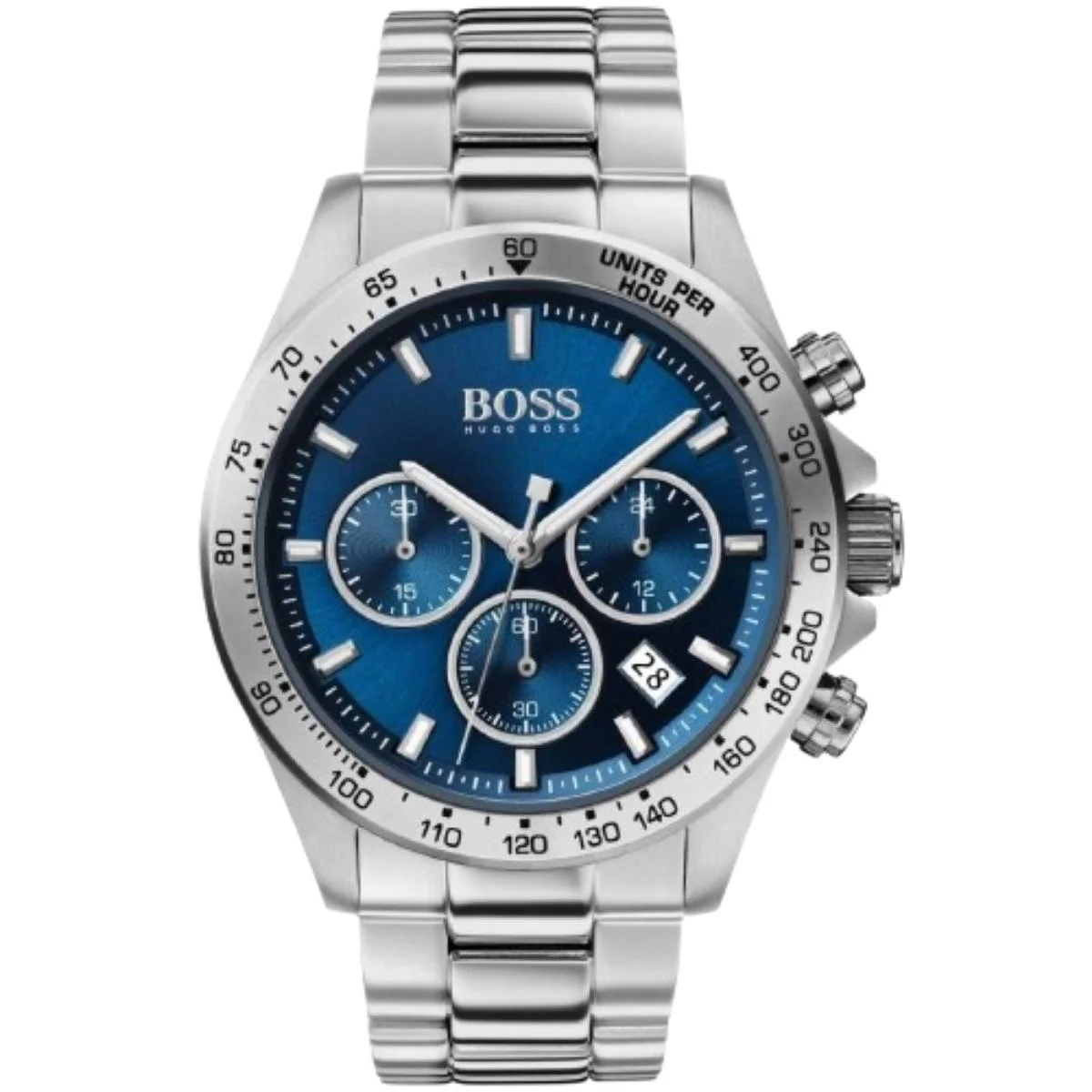
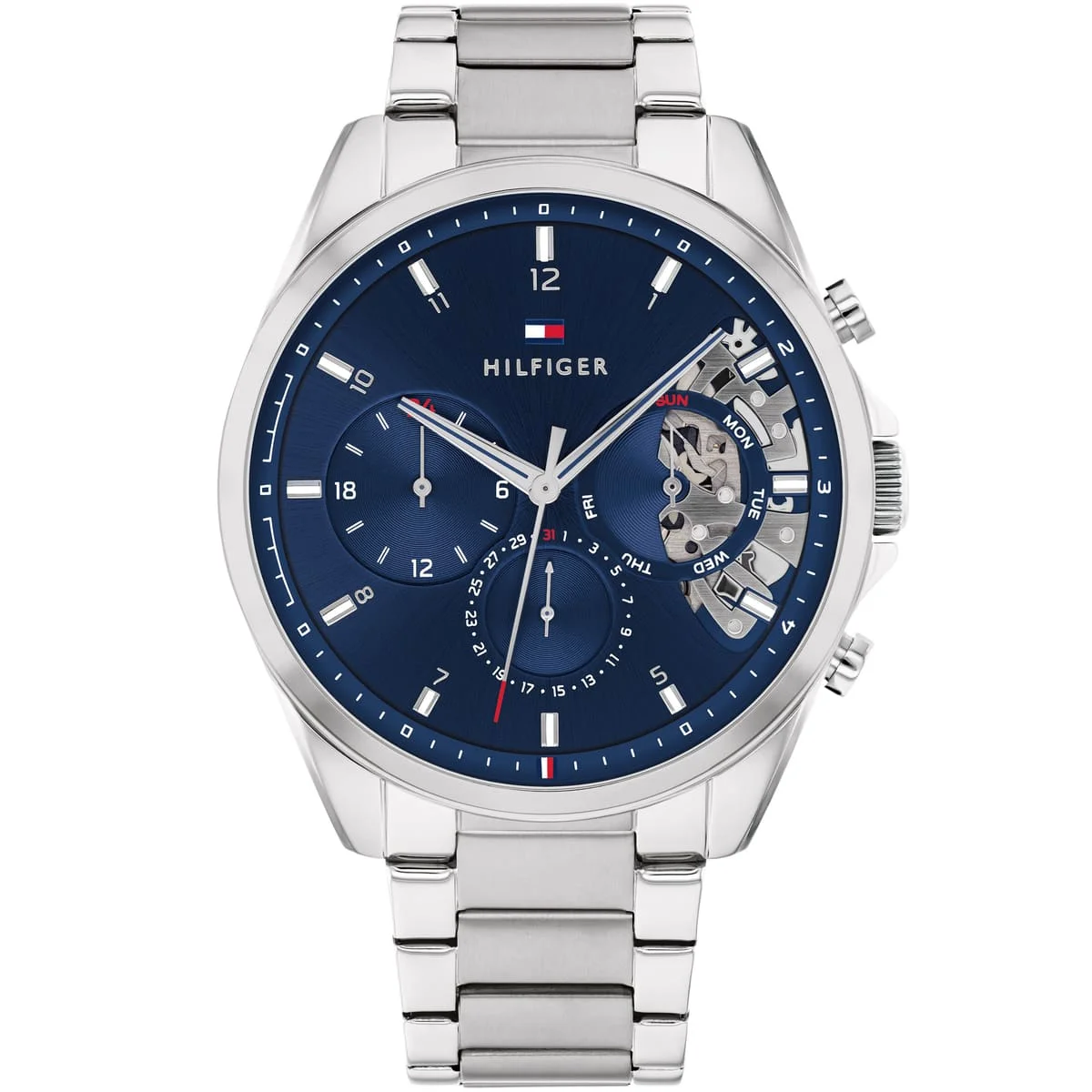
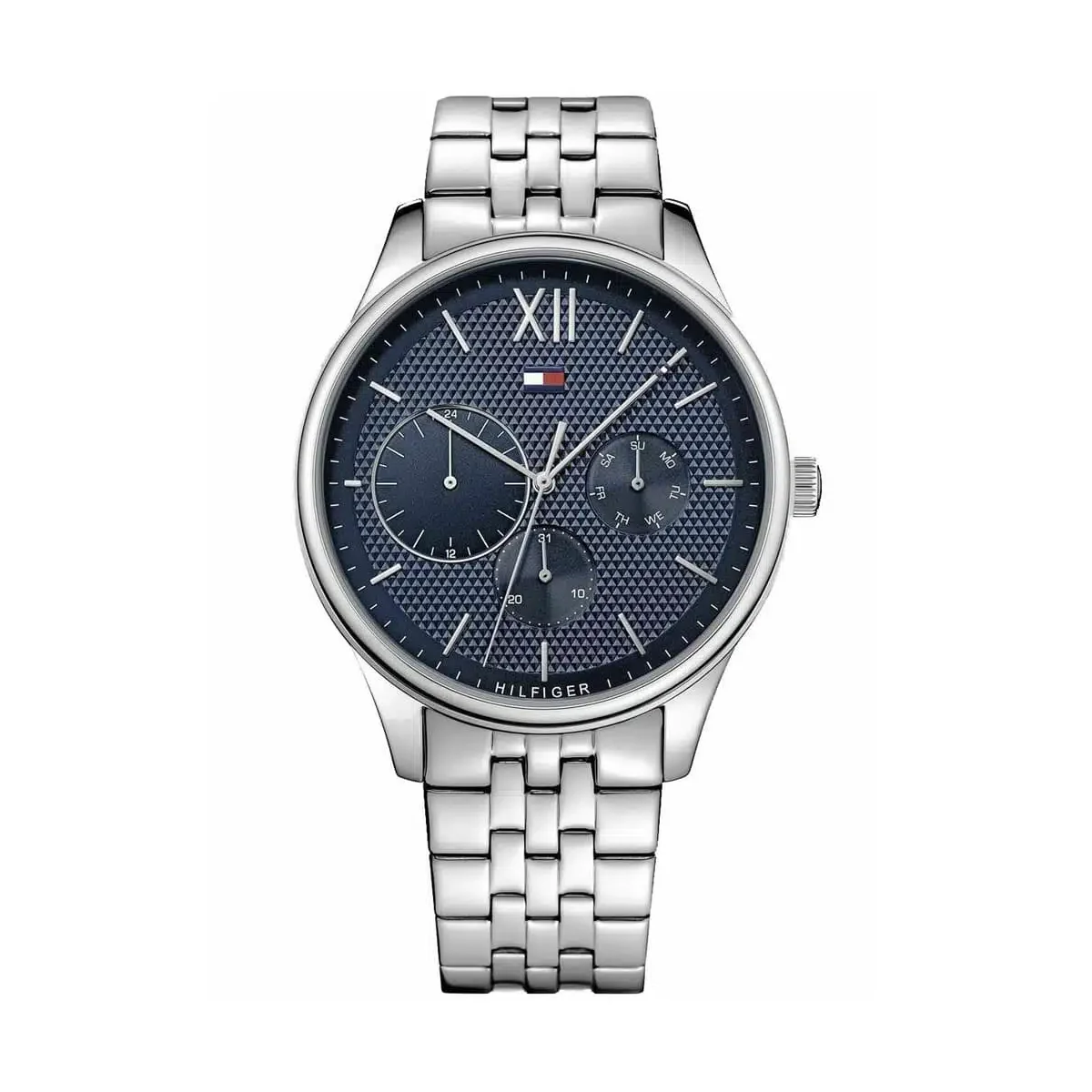
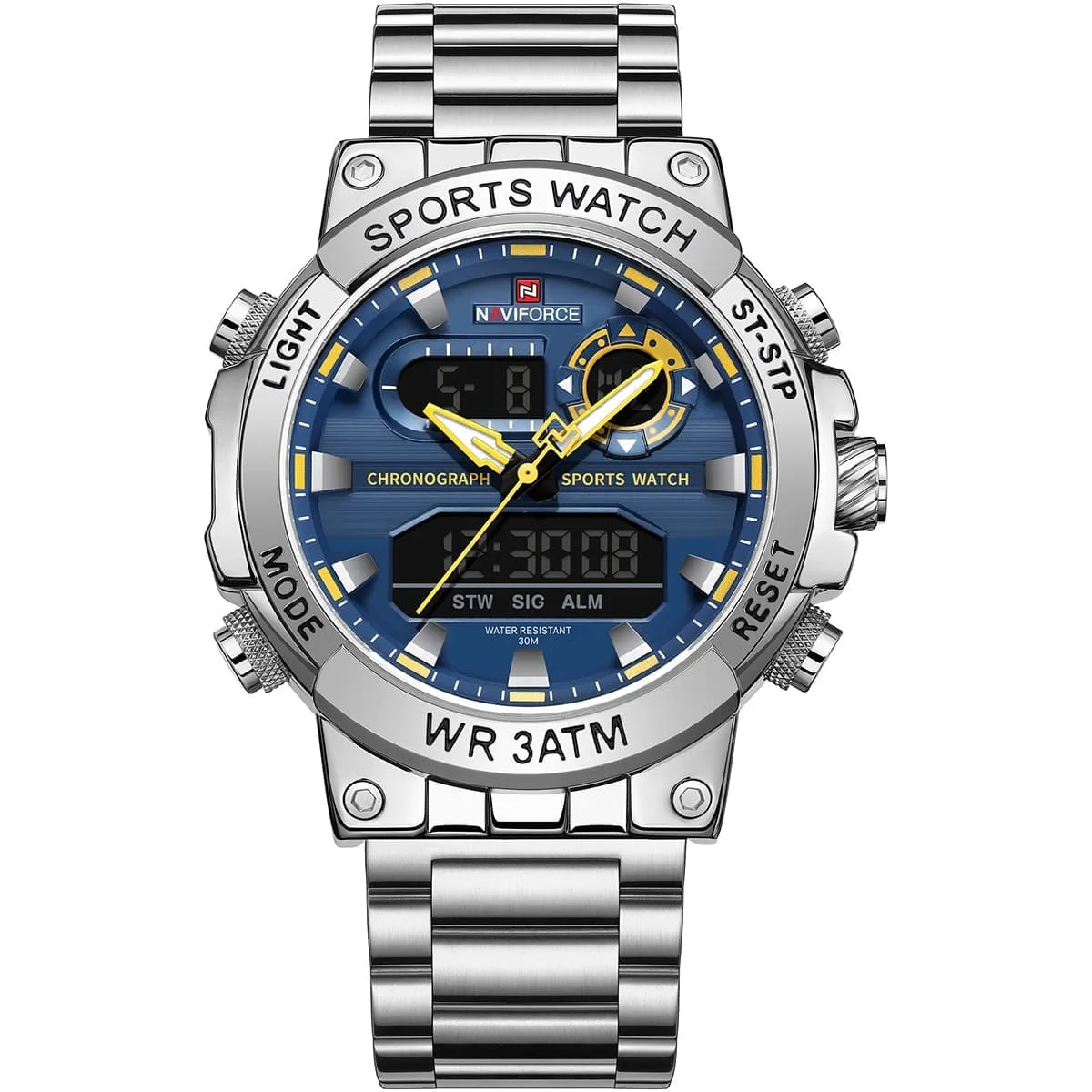
The right watch size depends on your wrist, not on fashion. Measure your wrist just above the bone, then use the diameter as a starting point: roughly 36 to 40 mm for a wrist under 16 cm, 40 to 44 mm for 16 to 19 cm, and 44 mm and above for broader wrists. After the diameter, check two numbers most people ignore, the distance from lug to lug and the thickness, because they decide whether a watch actually fits and how it sits under a sleeve. This guide explains every measurement on our product pages, shows how to measure at home with a strip of paper, and gives simple rules for men's and women's watches. We carry 5,551 watches at Brand Fashion, in sizes from small dress watches to large sport chronographs.
Key points
- Measure your wrist with a paper strip just above the wrist bone and compare it with a ruler.
- Case diameter is the headline number, but lug-to-lug length decides whether the watch overhangs.
- Thickness matters for comfort and shirt cuffs: under 10 mm slides easily, over 13 mm sits high.
- Strap width should be about half the case diameter for balanced proportions.
- With our 14-day exchange, a size that turns out wrong can be swapped while the watch is unworn.
How to measure your wrist at home
You do not need a tailor's tape or any special tool. Cut a strip of paper about 1 cm wide and wrap it around your wrist just above the wrist bone, where a watch sits. Mark the point where the paper overlaps, then lay the strip flat on a ruler. That length is your wrist circumference. Do it in the evening if you can, when the wrist is at its largest, especially in summer. Measure twice; a difference of half a centimetre is normal and simply tells you to leave a little room in the bracelet.
Also look at the shape of your wrist. Some wrists are round, others flat and wide. A flat wrist offers more surface for the case, so a slightly larger watch still looks balanced; a round wrist makes large cases tip over the edges. Hold your hand flat and look down at the top of your wrist: the visible width, from one side to the other, is the space your watch has to fill.
Write down both numbers, the circumference and the visible width, and keep them on your phone. They make online shopping much easier, and they let our team suggest models when you send a message on WhatsApp.
Case diameter: the headline number
The diameter is the width of the case, usually measured across the case without the crown. It is the number you see first on every product page, and it gives a quick idea of how big the watch will look. As a rough guide for men: 38 to 40 mm is small and classic, 41 to 43 mm is the modern middle, and 44 mm and above is large and sporty. For women: 26 to 32 mm is small and jewellery-like, 33 to 36 mm is medium, and 37 mm and above is a bold, oversized look.
Diameter alone can mislead. A watch with a thin bezel and a large dial looks bigger than its number, while a wide bezel, like that of a diver, makes the dial look smaller. Dial colour plays a part too: white and silver dials look larger than black ones of the same size. Case shape matters as well; a square or rectangular watch of 36 mm covers more of the wrist than a round one of the same width, so square cases are usually chosen a size or two smaller.
The crown and the pushers of a chronograph add width that the diameter does not include. A 42 mm chronograph with big pushers occupies more space on the wrist than a 42 mm three-hand watch. If you have a small wrist and want a chronograph, choose the smaller size available.

Lug to lug: the number that decides the fit
The lugs are the arms that hold the strap. The distance from the tip of the top lugs to the tip of the bottom lugs is called lug to lug, and it is the single most important number for fit. If the lug to lug is longer than the visible width of your wrist, the lugs overhang the sides and the watch looks too big, whatever its diameter.
As a guide, a lug to lug of 44 to 48 mm suits most men's wrists; 50 mm and more needs a broad wrist. A quick check: the lugs should end on top of the wrist, not on its sides, when you look straight down at it. For women, 34 to 40 mm suits most wrists. Watches with short, curved lugs hug the wrist and wear smaller than their diameter; watches with long, straight lugs wear larger.
Not every brand lists lug to lug. If the product page does not show it, ask us on WhatsApp and we can measure the watch for you, or compare it in one of our two Cairo stores with a watch you already own. To find the lug to lug of a watch you own, lay it face up on a ruler and read the distance from the tip of one pair of lugs to the other.
Thickness and how the watch sits
Thickness is measured from the case back to the top of the glass. It affects comfort, weight and how the watch looks under a sleeve. Under 10 mm, a watch slides easily under a shirt cuff and feels light; 10 to 13 mm is typical of most fashion and sport watches; above 13 mm the watch sits high, which suits sport and casual clothes but can catch on a cuff.
Quartz three-hand watches are usually the thinnest. Chronographs and automatic watches are thicker because their movements have more parts. Analogue-digital and digital sport watches, such as many Naviforce and Mini Focus models, can be thick but light, because their cases use resin or light alloys.
If you wear shirts with fitted cuffs every day, thickness may matter more to you than diameter. A slim 42 mm watch can feel more comfortable than a thick 40 mm chronograph, and our dress watches page gathers the slimmest models. Weight follows thickness: a steel chronograph on a bracelet can weigh 2 or 3 times as much as a slim quartz watch on leather, which you will notice by the end of a long day.
Strap width and proportions
The width of the strap at the lugs should be roughly half the case diameter: 20 mm on a 40 mm case, 22 mm on a 44 mm case, 16 to 18 mm on a 34 to 36 mm women's watch. This ratio keeps the watch balanced. A strap too narrow makes the case look heavy; a strap too wide makes a small watch look chunky.
The strap length matters as much as its width. Steel bracelets are shortened by removing links, which is done in a few minutes and is free at our stores within the warranty. Leather and silicone straps close with a buckle and usually suit wrists of about 15 to 20 cm; if you end up on the last hole, a different length is the solution. Mesh bracelets with sliding clasps adjust to any wrist, which makes them a safe choice for a gift when you do not know the size.
Bracelets also change how big a watch looks. A wide steel bracelet extends the visual mass of the case, making the watch look larger; a slim leather strap makes the same case look smaller and more elegant.

Size guides for men
For a wrist under 16 cm, choose 38 to 41 mm with a lug to lug under 47 mm. A slim three-hand watch on a leather or mesh strap will look elegant; chronographs should be the smaller sizes available. For a wrist between 16 and 18 cm, the most common size, 40 to 44 mm suits nearly every style, from dress watches to chronographs.
For a wrist between 18 and 20 cm, 43 to 46 mm looks proportionate, and bold sport watches and large chronographs come into their own. Above 20 cm, 46 mm and more is comfortable, and a small watch can look lost. In every case, check lug to lug against the visible width of your wrist before deciding.
Style follows size. Larger wrists carry sporty chronographs from Hugo Boss, Maserati and Naviforce easily, while slimmer wrists often look sharper with classic three-hand models from Tommy Hilfiger or Calvin Klein. Our chronograph page and casual watches page let you filter by size.
Size guides for women
For a wrist under 14 cm, 26 to 32 mm looks delicate and jewellery-like; a slim bracelet or a fine leather strap completes the look. For 14 to 16 cm, the most common range, 32 to 36 mm suits everyday and office wear and is the size of most Michael Kors and Guess women's watches. Above 16 cm, 36 to 40 mm and oversized boyfriend styles look natural.
Women's watches often follow fashion more than men's. Oversized cases of 38 to 42 mm on a slim wrist are a deliberate style, not a mistake, if you like a bold look. If you prefer elegance, stay closer to the guides above. Many women own both: a small, refined watch for the office and evenings, and a larger boyfriend watch for casual weekends. Crystal bezels add visual size, so a 36 mm crystal watch looks larger than a plain one.
Bracelet comfort is especially important for women's watches, which are often worn like jewellery. A bracelet that is too loose slides over the hand; one that is too tight leaves marks in the heat. Leave room for 1 finger, and remember that wrists swell slightly in summer.